Source replacement trampoline spring for Industrial, Auto, and Home Appliance
Find 30 verified options for replacement trampoline spring from manufacturers in Wenzhou, China. Compare specifications including material, load type, and surface treatment to select the right component for industrial, automotive, or motorcycle applications.
Key considerations
Products List


Comprehensive Sourcing Guide
Strategic Sourcing Guide for Replacement Trampoline Springs
Understanding Technical Specifications and Material Composition
When sourcing replacement trampoline springs, the primary objective is to identify components that match the mechanical demands of the original equipment while ensuring long-term durability under cyclic loading. The product landscape for these springs is defined by specific material properties and geometric configurations. Based on available industry data, the core material for high-performance trampoline springs is typically steel, with stainless steel variants also available for environments requiring enhanced corrosion resistance. The choice between standard steel and stainless steel often dictates the application context, particularly for outdoor installations where exposure to moisture and UV radiation is constant.
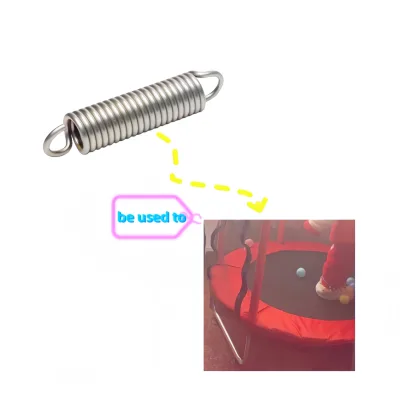
The mechanical function of these springs is critical. They are designed to operate primarily as buffer and pressed components, absorbing the kinetic energy generated during jumping and providing the necessary restoration force to return the mat to its neutral position. The load type is predominantly compression, although some designs may incorporate extension characteristics depending on the mounting mechanism. The physical shape of the spring is a decisive factor in its performance; while cylindrical shapes are common for general industrial applications, trampoline springs frequently utilize a conical or coil configuration to optimize the force-deflection curve. The wire diameter range is substantial, spanning from a minimum of 0.1mm to a maximum of 12mm, allowing for precise tuning of the spring rate to suit different trampoline sizes and user weights.
The production process significantly influences the metallurgical properties of the final product. Cold rolling is a prevalent method for manufacturing these springs, as it enhances the tensile strength and surface finish of the wire. However, hot rolling processes are also observed in the broader spring manufacturing sector, often utilized for larger diameter wires or specific industrial applications. Buyers must verify which process was employed, as it affects the residual stress and fatigue life of the component. The winding direction is another technical variable, with options available for both left and right-hand winds, which must align with the specific mounting hardware of the trampoline frame to ensure proper tension distribution.
Compliance, Certification, and Material Standards
In the B2B procurement of mechanical components, verifying compliance with international standards is non-negotiable for risk mitigation. The material standard for steel springs is often referenced against GB 4357-09 or an equivalent specification. This standard governs the chemical composition and mechanical properties of the steel wire used. Buyers should not assume that all listed products automatically meet this standard; instead, they must request the mill test certificate or material certification to confirm that the supplier's steel conforms to the specified grade.
Beyond material composition, the surface treatment is a critical compliance factor, particularly for outdoor sporting goods. Zinc coating is a standard treatment applied to steel springs to prevent rust and corrosion. The thickness of this coating is a measurable quality indicator, with observed ranges typically falling between 8 and 10 micrometers. A coating thickness outside this range may indicate insufficient protection or potential quality control issues. Furthermore, the supplier's facility should hold relevant certifications such as ISO9001 for quality management, SGS for inspection verification, RoHS for environmental compliance regarding hazardous substances, CE for European market access, and TS16949 (now IATF 16949) for automotive-grade quality systems, which often translates to high reliability for industrial applications.
The certification landscape also includes third-party verification. Some suppliers operate under a "Work Via The 3rd Party" model, where independent agencies conduct audits and testing. While this can add a layer of assurance, the buyer must ensure that the third-party reports are current and cover the specific product model being procured. The testing methodology employed by the manufacturer is typically random sample inspection, adhering to an AQL (Acceptable Quality Limit) level of 1.0. This statistical standard defines the maximum number of defective units allowed in a sample size, providing a quantifiable metric for quality assurance. Buyers should verify that the supplier's AQL level matches their own risk tolerance, as a lower AQL number indicates stricter quality control.
Cost Drivers and Pricing Dynamics
The pricing structure for replacement trampoline springs is influenced by a complex interplay of material costs, manufacturing complexity, and order volume. The observed price range in the market can vary significantly, with some listings indicating very low entry points, while others reflect the cost of premium materials like stainless steel or specialized surface treatments. The material standard plays a direct role in cost; steel conforming to GB 4357-09 may carry a different price point than generic steel wire. Additionally, the wire diameter is a primary cost driver; thicker wires require more raw material and often more energy-intensive processing, leading to higher unit costs.
Production processes also impact the final price. Cold rolling, while offering superior mechanical properties, may involve higher processing costs compared to other methods. The customization level is another significant factor. While standard springs are produced in high volumes, custom sizes and specific winding directions require tooling adjustments and setup time, which increases the unit price. The business model of the supplier, often identified as Factory OEM, suggests that direct factory sourcing can offer competitive pricing by eliminating middlemen, but this is contingent on meeting the supplier's Minimum Order Quantity (MOQ).
The MOQ for these components can range widely, from a single unit for prototyping to millions of units for large-scale industrial contracts. This vast range allows buyers to scale their procurement strategy based on their immediate needs and budget constraints. However, buyers must be aware that lower MOQs often come with a higher per-unit cost due to the fixed costs of setup and quality control being amortized over fewer units. Conversely, larger orders benefit from economies of scale but require significant upfront capital and storage capacity. The packaging method, whether in OPP bags with blank cartons or more robust wooden cases for international shipping, also adds to the total landed cost. Buyers should factor in these logistical expenses when comparing supplier quotes to ensure a true cost-of-ownership analysis.
Typical Applications and Functional Versatility
Replacement trampoline springs are not limited to recreational use; their functional versatility extends across multiple industrial and commercial sectors. The primary application remains in the sporting goods and recreation industry, specifically for trampoline maintenance and replacement. In this context, the springs must provide a consistent bounce and absorb shock effectively to ensure user safety. The load type, whether compression or extension, and the shape, such as conical or cylindrical, are tailored to the specific trampoline design to maintain the intended tension and stability.
Beyond trampoline parks and home use, these springs find applications in the automotive and motorcycle industries. In these sectors, the springs serve as buffer, restoration, and drive components within suspension systems or engine mechanisms. The ability to withstand high-frequency cyclic loading makes them suitable for automotive applications where reliability is paramount. Similarly, in the home appliance sector, these springs are utilized in mechanisms requiring precise force restoration, such as washing machine dampers or dryer door latches. The usage profile often includes industrial settings where heavy-duty springs are required for machinery that operates under constant stress.
The functional attributes of the springs, including measurement, restoration, drive, and phonation, highlight their adaptability. While "phonation" may seem unusual for a mechanical spring, it refers to applications where the spring's vibration or movement generates sound, such as in musical instruments or specific signaling devices. The end type, which includes various hooks, allows for easy integration into different mounting systems. This versatility means that a single supplier can often provide solutions for diverse markets, provided they have the capability to customize the wire range, winding direction, and end types to meet specific client requirements. Buyers should evaluate the supplier's experience in these varied sectors to ensure they can deliver a product that meets the specific demands of their application.
Supplier Evaluation and Quality Control Protocols
Selecting the right supplier requires a rigorous evaluation of their manufacturing capabilities, quality control systems, and business transparency. The supplier's location, often cited as Wenzhou, China, is a significant hub for spring manufacturing, offering access to a robust supply chain and specialized labor. However, the origin alone is not a guarantee of quality; buyers must verify the supplier's business mode, which is typically Factory OEM, indicating they manufacture the products directly rather than acting as a trading company. This distinction is crucial for ensuring direct communication regarding technical specifications and customizations.
Quality control is the backbone of reliable procurement. The supplier should employ a random sample inspection method with a defined AQL level, such as AQL 1.0, to ensure that the batch meets the required standards. The tolerance for the spring rate is typically specified as between +3% and 10%, a range that buyers must verify against their design requirements. Deviations beyond this range can lead to premature failure or performance issues. Additionally, the tolerance for the physical dimensions should adhere to GB Standard, Grade II, or be customized as per the buyer's specific requirement. Buyers should request detailed inspection reports that document these tolerances and the testing methods used to verify them.
The packaging method is another indicator of the supplier's attention to detail. Products are often packed in OPP bags with blank cartons, or in more robust carton pallets for bulk shipments. For international logistics, the use of outer wooden cases may be necessary to prevent damage during transit. The normal carton size, such as 23x23x31 cm, provides a baseline for logistics planning, but buyers should confirm if custom packaging is available to optimize shipping costs. Furthermore, the supplier's ability to handle customization, including custom sizes and specific winding directions, demonstrates their flexibility and technical competence. Buyers should assess the supplier's response time and willingness to provide samples before committing to a large order, as this interaction often reveals the supplier's professionalism and reliability.
Long-Term Procurement and Supply Chain Considerations
Sourcing replacement trampoline springs is not merely a transactional activity but a strategic decision that impacts long-term operational efficiency and product reliability. The customization availability offered by suppliers allows for the development of proprietary spring designs that can differentiate a brand in a competitive market. However, this customization comes with the responsibility of managing the supply chain to ensure consistency. Buyers should establish clear specifications for the wire range, from the minimum 0.1mm to the maximum 12mm, and ensure that the supplier can maintain these tolerances over multiple production runs.
The lead time and production capacity are critical factors for long-term planning. While specific lead times are not universally standardized, the MOQ range of 1 to 10,000,000 units suggests that suppliers can accommodate both small and large orders. Buyers should negotiate lead times that align with their inventory management strategy to avoid stockouts or overstocking. The business mode of Factory OEM implies a direct relationship, which can facilitate faster communication and quicker resolution of any production issues. However, buyers must also consider the geopolitical and logistical risks associated with sourcing from specific regions, such as Wenzhou, China, and develop contingency plans to mitigate these risks.
Sustainability and environmental compliance are increasingly important in long-term procurement. Certifications like RoHS and ISO9001 indicate that the supplier is committed to environmental standards and quality management. Buyers should verify that the supplier's production processes, including surface treatments like zinc coating, adhere to these standards to ensure that the final product does not contain hazardous substances. The ability to work with third-party certifications further enhances the supplier's credibility and reduces the buyer's risk. By focusing on suppliers with robust quality control, clear standards, and a commitment to sustainability, buyers can build a resilient supply chain that supports their long-term business goals.
FAQs
What materials are used for replacement trampoline springs?
Replacement trampoline springs are primarily made from steel, with stainless steel variants also available. These materials ensure durability and resistance to corrosion, especially for outdoor installations where exposure to moisture is constant.
Which surface treatment protects these springs from rust?
Zinc coating is the standard surface treatment applied to steel springs to prevent rust and corrosion. The coating thickness typically ranges between 8 and 10 micrometers to ensure adequate protection during long-term use.
Can these springs be customized for specific trampoline models?
Yes, customization is available for wire range, winding direction, and end types to match specific mounting requirements. Buyers can request custom sizes and specific tolerances, often adhering to GB Standard Grade II or other agreed specifications.
What certifications do the manufacturers typically hold?
Manufacturers often hold ISO9001, SGS, RoHS, CE, and TS16949 certifications to ensure quality and compliance. These credentials verify that the production processes meet international standards for safety and environmental responsibility.
How are the springs tested for quality assurance?
Quality assurance is performed using random sample inspection methods adhering to an AQL level of 1.0. This statistical standard defines the maximum number of defective units allowed in a sample size to ensure batch reliability.
What is the typical wire diameter range for these springs?
The wire diameter ranges from a minimum of 0.1mm to a maximum of 12mm. This wide range allows for precise tuning of the spring rate to suit different trampoline sizes and user weight requirements.
Where are these replacement springs typically manufactured?
These springs are typically manufactured in Wenzhou, China, a major hub for spring production. This location offers access to a robust supply chain and specialized labor for efficient factory OEM production.